
السعر
مجاني 100%، تنزيلات غير محدودة
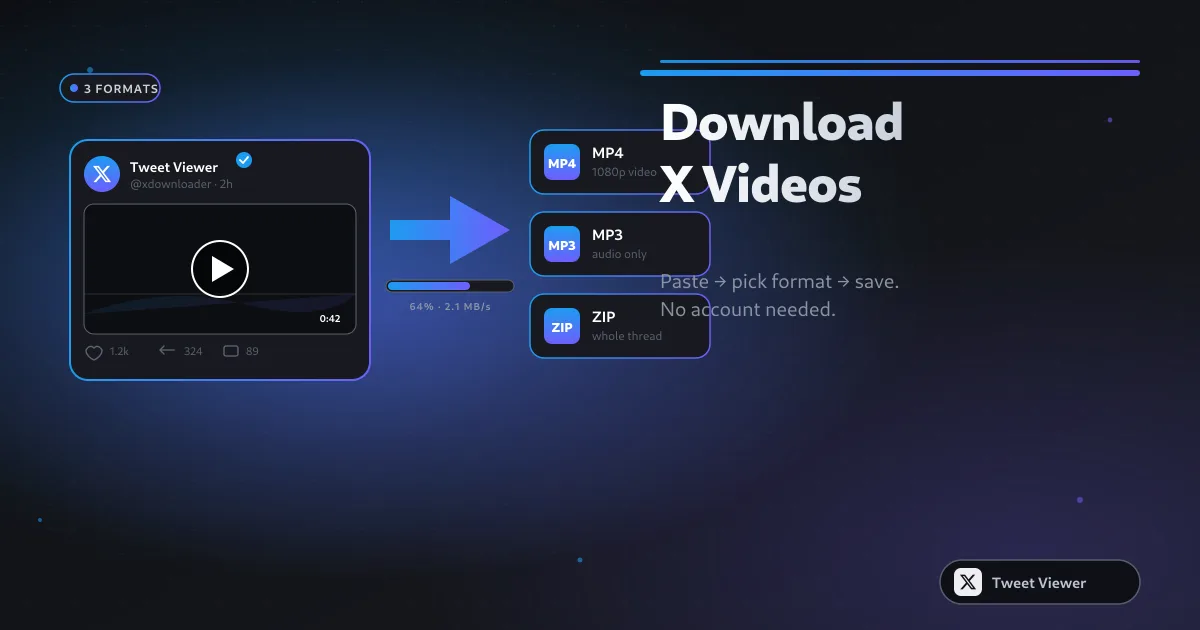
الصق أي رابط منشور من X (تويتر) يحتوي على صوت، وستقوم الأداة بتحميل ملف MP4 المصدر، ثم تحويل المسار الصوتي إلى MP3 بالكامل على جهازك باستخدام ffmpeg.wasm. لا يُرفع أي شيء إلى خادم، ولا يُثبَّت أي إضافة، ويصل الملف النهائي إلى مجلد التنزيلات لديك خلال ثوانٍ معدودة. هذه أسرع طريقة لاستخراج الصوت من تغريدة دون الجمع بين أدوات منفصلة.
الصق رابط منشور من X (تويتر)، اضغط على تحميل، وستستخرج الأداة المسار الصوتي فقط من الفيديو المصدر في ملف MP3 بمعدل بت ثابت 320 كيلوبت/ثانية — يتم التحويل بالكامل على جهازك عبر ffmpeg.wasm، لذا لا يُرفع إلينا أي شيء يخص الفيديو أو رابط التغريدة.
تقود أربعة سيناريوهات معظم حركة الاستخدام. يستخرج مستمعو البودكاست مقاطع مميزة من تغريدات المقابلات — دليل مقاطع البودكاست يوضح كيفية بناء تجميعة من سلسلة تغريدات. ويلتقط منتجو الأغاني ومنسقو الموسيقى الأغاني المغطاة والريمكسات والمقتطفات الإيقاعية التي ينشرها المبدعون مباشرة على X. ويؤرشف الصحفيون ومتعلمو اللغات مذكرات صوتية للناطقين الأصليين لأغراض المرجعية والتفريغ النصي.
يشرح دليلنا الكامل لمعدل البت والإعدادات سبب كون 320 CBR خيارًا افتراضيًا أكثر أمانًا من VBR عندما يُعاد ترميز ملف MP3 لاحقًا بواسطة مضيف بودكاست أو محطة عمل صوتية رقمية (DAW). أما على الجانب المتنقل، فيغطي شرح الآيفون نقطة الوصول الدقيقة في تطبيق الملفات وكيفية توجيه ملف MP3 إلى مذكرات صوتية أو Apple Music أو تطبيق بودكاست — دون الحاجة إلى تثبيت أي تطبيق.
افتح منشور X (تويتر) الذي تريد صوته. اضغط على أيقونة المشاركة واختر «نسخ الرابط»، أو انسخ الرابط مباشرة من شريط عنوان متصفحك.
الصق الرابط المنسوخ في حقل الإدخال أعلى الصفحة. تبويب MP3 محدد بالفعل، لذا تعرف الأداة أن عليها تجهيز الملف كصوت.
اضغط على تحميل. يُستخرج المسار الصوتي من الفيديو المصدر باستخدام ffmpeg.wasm — بالكامل داخل متصفحك، دون رفع أي شيء — ويصل ملف MP3 النهائي إلى مجلد التنزيلات لديك خلال ثوانٍ.
بشكل افتراضي، يستهدف المحوّل ملف MP3 بمعدل 128 كيلوبت/ثانية، وهو توافق دقيق مع معظم صوتيات فيديوهات X (عادةً AAC بمعدل 128 كيلوبت/ثانية في ملف MP4 المصدر). ولأن MP3 يُعاد ترميزه من المصدر المضغوط، فإن جودة الناتج محدودة بما تستضيفه X — توقع إعادة إنتاج أمينة للكلام والمقاطع الموسيقية والبودكاست، لكن لا تتوقع أن يتحول مقطع بودكاست بمعدل 128 كيلوبت/ثانية إلى جودة استوديو لمجرد تغيير الحاوية.
يحظى تبويب MP3 بشعبية لحفظ مقتطفات البودكاست، والتقاط الأغاني المغطاة والريمكسات المشاركة على X، والاحتفاظ بمذكرات صوتية من المبدعين، وأرشفة المقابلات المنطوقة، واستخراج الصوت من المقاطع الطويلة للاستماع أثناء القيادة أو التمرين — في أي مكان يكون فيه ملف الفيديو غير عملي. ولأن MP3 مدعوم عالميًا، يعمل الملف على أي هاتف أو نظام صوت سيارة أو مشغل MP3 دون برامج إضافية.
مجاني 100%، تنزيلات غير محدودة
لا حاجة لتسجيل دخول أو إنشاء حساب
لا شيء — ملف MP4 أصلي نظيف
1080p Full HD (حسب المصدر)
iPhone وiPad وAndroid وWindows وMac
يعمل في المتصفح — لا شيء لتثبيته
لا تُخزَّن الروابط، ولا تُتتبَّع التنزيلات
إنها أداة متصفح مجانية تستخرج الصوت من أي فيديو عام على تويتر (X) وتحفظه بصيغة MP3. الصق رابط المنشور، واختر معدل البت، وحمّل — دون تسجيل دخول، ودون تثبيت تطبيق، ودون علامة مائية.
لا. لا تتطلب أداة تحميل MP3 أي حساب أو تسجيل دخول. يعمل كل شيء داخل متصفحك ولا يُطلب منك أبدًا بيانات اعتماد حساب X، لذا يبقى حسابك خاصًا.
يُخرج المحوّل ملف MP3 بمعدل 128 كيلوبت/ثانية، وهو ما يطابق معدل بت الصوت الذي توفره X عادةً. يبدو الكلام ومعظم المقاطع الموسيقية مطابقًا لتشغيل التغريدة الأصلية.
نعم. يعمل التحويل داخل Safari على آيفون باستخدام WebAssembly، ويُحفظ ملف MP3 في تطبيق الملفات. قد تظهر لك رسالة طلب إذن في المرة الأولى التي تحفظ فيها ملفًا — اسمح بها ليبدأ التحميل.
لا. لا يمكن للأداة الوصول إلى المنشورات الخاصة أو المحمية أو المقيدة بإدارة الحقوق الرقمية (DRM) — يمكنك فقط استخراج MP3 من منشورات X المرئية للعامة.
أصغر بكثير. عادةً ما يؤدي إزالة المسار المرئي إلى تقليص الملف بنسبة 80 إلى 95 بالمئة، بحيث يتحول فيديو تغريدة حجمه 40 ميغابايت إلى ملف MP3 بحجم 2 إلى 6 ميغابايت، حسب المدة.
نعم — الناتج ملف صوتي MP3 خالص دون فيديو مُضمَّن، لذا يعمل في أي مكان يعمل فيه الصوت، ويمكن إضافته إلى أي تطبيق بودكاست أو موسيقى.
الصق رابط منشور X في الحقل أعلى هذه الصفحة، وتأكد من تحديد تبويب MP3 (وهو الافتراضي هنا)، واضغط على تحميل. يستخرج محوّل تويتر إلى MP3 المسار الصوتي على جهازك ويعيد إليك ملف MP3 خلال ثوانٍ — دون رفع إلى أي خادم، ودون تسجيل، ودون قائمة انتظار. يصل الملف النهائي مباشرة إلى مجلد التنزيلات لديك.
نعم — هذا بالضبط ما يفعله تبويب MP3. فبدلًا من سحب ملف MP4 كاملًا، يقوم بجلب الفيديو، وإزالة المسار المرئي H.264، وإعادة تجميع الصوت AAC داخل حاوية MP3. تحصل على ملف صغير صوتي فقط مع التخلص من الفيديو. مفيد لمقتطفات بودكاست مأخوذة من مقابلات، أو مقتطفات موسيقية، أو منشورات تعليق صوتي تريد الاستماع إليها أثناء التنقل.
128 كيلوبت/ثانية افتراضيًا، مُعاد ترميزها من مسار AAC المصدر الذي توفره X (وهو أيضًا عادةً نحو 128 كيلوبت/ثانية AAC). ولأن صوت AAC بمعدل 128 كيلوبت/ثانية وMP3 بمعدل 128 كيلوبت/ثانية متكافئان تقريبًا بالنسبة للكلام ومعظم الموسيقى، فإن التحويل شفاف عمليًا — لن تلاحظ فرقًا عن تشغيل التغريدة الأصلية. لا يوجد خيار عديم الفقدان لأن المصدر نفسه فيه فقدان أصلًا.
تسمح شروط خدمة X بحفظ محتواك الخاص بحرية، والمحتوى العام وفق مبادئ الاستخدام العادل القياسية للمرجعية الشخصية أو التعليق أو النقد أو التعليم — وهي القواعد نفسها التي تنطبق على أي وسائط يتم تحميلها. ينبغي ألا تعيد توزيع صوت محمي بحقوق النشر تجاريًا أو تعيد نشره بطريقة تنافس العمل الأصلي. وعند الشك، انسب المصدر واربط بالمنشور الأصلي.
بشكل غير مباشر، نعم. لا تملك المساحات الصوتية المباشرة رابطًا قابلًا للتحميل أثناء بثها، لكن بمجرد أن ينشر المضيف إعادة التشغيل، مرّر رابط منشور المساحة عبر أداة تحميل MP4 أولًا للحصول على ملف MP4، ثم أعد ذلك الملف إلى تبويب MP3 هذا. خطوتان، لكن النتيجة النهائية ملف MP3 نظيف وصوتي فقط لتسجيل المساحة بأكمله.
افتح Safari على آيفون، والصق رابط منشور X في الحقل أعلاه، واضغط على تبويب MP3، ثم اضغط على تحميل. سيطلب Safari الإذن في المرة الأولى لحفظ ملف — اسمح به ليصل ملف MP3 إلى تطبيق الملفات ضمن التنزيلات. من هناك، اضغط مطولًا على الملف لنقله إلى مجلد، أو مشاركته مع تطبيق آخر، أو فتحه في تطبيق الموسيقى أو المذكرات الصوتية للتشغيل.
نعم — محوّل تويتر إلى MP3 مجاني تمامًا مع تحويلات غير محدودة، دون تسجيل دخول، ودون بريد إلكتروني، ودون علامة مائية. تتم المعالجة الثقيلة داخل متصفحك باستخدام WebAssembly، لذا لا توجد تكلفة خادم نُحمّلها لك. حوّل مقطعًا واحدًا أو مئتين في يوم واحد؛ لا شيء يحدّ من العملية. لا توجد فئات مدفوعة أو صيغ متميزة مخبأة خلف حاجز تسجيل.
هذا قيد خاص بمصدر الصوت، وليس بالمحوّل. لا تطبق X توحيدًا لمستوى الصوت عند الرفع، لذا تصل فيديوهات التغريدات بأي مستوى سجّلها المبدع بها — وغالبًا ما يكون أقل بـ 6 إلى 12 ديسيبل من المعيار الإذاعي. يحافظ ملف MP3 على ذلك المستوى بدقة تامة. إذا احتجت ملفًا أعلى صوتًا، افتحه في مشغل مثل VLC وارفع مستوى الكسب، أو مرره عبر أداة توحيد مثل مرشح loudnorm الخاص بـ ffmpeg.
على آيفون، يحدث كل شيء داخل Safari — لا حاجة إلى تثبيت أي تطبيق. الصق رابط المنشور، واختر تبويب MP3، واضغط على تحميل، وأكّد رسالة الحفظ. سيضع نظام iOS ملف MP3 في تطبيق الملفات ضمن التنزيلات (أو المجلد الذي تختاره). من هناك يمكنك مشاركته عبر AirDrop، أو نقله إلى مجلد المذكرات الصوتية أو الموسيقى، أو فتحه في مشغل خارجي مثل VLC. يغطي الشرح الكامل لآيفون التكامل مع تطبيق الاختصارات ونصائح التشغيل في الخلفية للمقاطع الأطول.
لا. المحوّل مجرد صفحة ويب عادية — لا شيء لتثبيته، ولا إضافة لتحميلها يدويًا، ولا برنامج مكتبي لإبقائه محدّثًا. يعمل كل شيء داخل التبويب المفتوح لديك بالفعل. وهذا يعني أنه يعمل بالطريقة نفسها على Windows وmacOS وLinux وChromeOS وiOS وAndroid، ويمكنك استخدامه على حاسوب عمل مقيد حيث يُحظر تثبيت البرامج. لمزيد من التفصيل حول كيفية مقارنة سير عمل قائم على المتصفح دون تثبيت ببرامج الاستخراج المكتبية القديمة، تناولنا الموضوع بالتفصيل في المدونة.
بالنسبة للصوت المصدره من X، فإن 128 كيلوبت/ثانية هو الجواب الصادق. المسار الأصلي هو تقريبًا AAC بمعدل 128 كيلوبت/ثانية، لذا فإن إعادة الترميز إلى MP3 بمعدل 320 كيلوبت/ثانية لا يفعل شيئًا سوى حشو الملف ببايتات إضافية — فهو لا يخترع تفاصيل لم تكن موجودة في المصدر. لن تختار معدل بت أعلى إلا إذا كنت تخطط لإعادة ترميز الملف مرة أخرى لاحقًا وتريد الحفاظ على هامش إضافي. وإذا كنت تخزن الكثير من المقاطع على هاتفك، فإن 128 كيلوبت/ثانية يقلل الحجم أيضًا بنسبة 60% تقريبًا. يعرض دليل إعدادات جودة MP3 لدينا مخططات طيفية لاختبار الفراغ.
Not in a single click, but the workflow takes about ten seconds. Run the URL through the HD MP4 downloader first to save the full-quality video, then paste the same URL back into this MP3 tab to extract the audio track. Both tools run on-device, so you're not re-uploading anything, and the two outputs come from the same source file — the MP3 is bit-identical to the audio inside the MP4. Handy when you want a shareable video and a listen-on-the-go audio copy.
للاستماع الشخصي — كاقتطاف جزء من بودكاست للاستماع لاحقًا، أو حفظ تعليق صوتي أعجبك، أو الاحتفاظ بنسخة من محاضرة — يتعامل معظم الناس مع الأمر مثل الإشارة المرجعية تمامًا. أما الأمر الذي يصبح غامضًا فهو الموسيقى: الأغاني المرفوعة على X تظل مملوكة لأصحاب حقوقها، لذا فإن إعادة رفعها أو ريمكسها أو تحقيق دخل منها في مكان آخر قد يثير مشكلات حقوق النشر. انسب الفضل للمبدعين، ولا تعد نشر موسيقى الآخرين تجاريًا، وعند الشك اسأل صاحب المنشور. يغطي قسم الأسئلة الشائعة العام لدينا هذا الموضوع بمزيد من التفصيل.
لا. تستخدم خطوة إعادة الترميز ffmpeg.wasm، وهي نسخة WebAssembly من ffmpeg تعمل بالكامل داخل تبويب متصفحك. عندما تلصق الرابط، يجلب متصفحك الفيديو المصدر مباشرة من شبكة توصيل المحتوى الخاصة بـ X، ثم يزيل ffmpeg.wasm الفيديو ويكتب ملف MP3 على قرصك المحلي. نحن لا نرى الرابط، ولا الفيديو، ولا ملف MP3 النهائي — لا توجد قائمة انتظار تحويل من جانب الخادم. إذا أردت التفاصيل التقنية، توضح صفحة الخصوصية لدينا بالضبط ما يغادر جهازك وما لا يغادره.
أداة الويب هي الخيار الأكثر أمانًا. تميل إضافات استخراج MP3 إلى أن تُسحب من متجر Chrome الإلكتروني — بسبب انتهاكات السياسات، أو تبديلها بصمت إلى موجّهات تابعة للعمولة بعد تغيير الملكية، أو لأن المطور الأصلي انسحب وقام مالك جديد بإدراج شيفرة إعلانية. وعندما تسحب Google القائمة، تتوقف نسختك المثبتة عن تلقي تحديثات الأمان ويصبح أي خلل دائمًا. أداة ويب بسيطة لا تحتاج إلى أذونات تثبيت ولا يمكنها قراءة التبويبات الأخرى المفتوحة لديك. يغطي دليل جودة MP3 لدينا أيضًا سبب مطابقة تبويب المتصفح لجودة الترميز الأصلية.
نعم — أي متصفح Chromium حديث (Chrome أو Edge أو Brave أو Arc أو Opera)، أو Firefox، أو Safari على macOS يتعامل مع التحويل بالطريقة نفسها تمامًا. لا توجد نسخة خاصة بـ Windows فقط، ولا نسخة على متجر Mac App Store، ولا تحميل منفصل لـ Linux — الأداة بأكملها صفحة ويب واحدة. يصل ملف MP3 إلى مجلد التنزيلات الافتراضي لديك ويعمل في Groove أو Windows Media Player أو QuickTime أو VLC أو iTunes دون تثبيت أي برنامج ترميز. يقارن شرحنا لسطح المكتب دون تثبيت بين سير عمل المتصفح وبرامج الاستخراج المكتبية القديمة جنبًا إلى جنب.
هذه ليست استشارة قانونية، والجواب الصادق يختلف حسب البلد. في معظم الأماكن، تُعامل عملية استخراج صوت عام للاستماع الشخصي الخاص — مقطع محاضرة، أو مقتطف بودكاست، أو مذكرة صوتية — بطريقة مشابهة للإشارة المرجعية لصفحة. أما استخراج مقاطع موسيقية محمية بحقوق النشر وإعادة توزيعها، أو تحقيق دخل من الملف، أو تجاوز إدارة الحقوق الرقمية (DRM)، فهنا تواجه مشكلات بموجب قوانين مثل DMCA في الولايات المتحدة أو توجيه حقوق النشر الأوروبي. تحقق من شروط خدمة X وقواعد حقوق النشر المحلية لديك، وعندما يكون المقطع موسيقى تجارية بوضوح، انسب الفضل لصاحب الحقوق أو رخّصه بشكل صحيح بدلًا من إعادة رفع ملف MP3.
على جهازك، من البداية إلى النهاية. ffmpeg.wasm هو نسخة WebAssembly مُصرَّفة من ffmpeg تُشحن كجزء من الصفحة وتعمل في التبويب نفسه المفتوح لديك — يُجلب ملف MP4 المصدر إلى ذاكرة مؤقتة، ويُفصل مسار AAC، ويُكتب ملف MP3 مرة أخرى على القرص، ولا تلامس أي من هذه البايتات خادمنا. لا توجد قائمة انتظار للرفع، ولا وحدة معالجة للتحويل، ولا ملف مؤقت من جهتنا. الاستعلام الوحيد هو الذي يجريه متصفحك إلى واجهة FxTwitter API العامة لمعرفة رابط فيديو التغريدة — ولا يشارك خادمنا في ذلك إطلاقًا. التفاصيل الكاملة على صفحة الخصوصية لدينا.
نعم، وهذه هي الخطوة المعتادة بين مقتطِفي البودكاست والأرشيفيين. الصق قائمة روابط منشوراتك على X في أداة التحميل الجماعي لتويتر أولًا للحصول على جميع ملفات MP4 في ملف .zip واحد، ثم فك ضغطها محليًا، وأعد المقاطع التي تريد صوتها فعليًا إلى تبويب MP3 هذا واحدًا تلو الآخر. مرحلتان بدلًا من واحدة، لكنك تحتفظ بالفيديوهات الأصلية كأرشيف مرجعي، وتعيد ترميز المقاطع التي ستستخدمها فعليًا فقط — دون إهدار مساحة القرص على ملفات MP4 حجمها 40 ميغابايت لمذكرات صوتية مدتها دقيقتان ستسمعها مرة واحدة فقط.
تقع الإخفاقات دائمًا تقريبًا ضمن ثلاث فئات. تُرجع المنشورات الخاصة أو المحمية خطأ تفويض لا يمكن للأداة تجاوزه — اطلب الفيديو من صاحب المنشور مباشرة. تُرجع المنشورات المحذوفة خطأ 404، وهو ما لا يمكن لأي أداة استعادته. أما المنشورات التي تحتوي وسائطها على صور فقط أو اقتباس تغريدة نصي فقط، فلا يوجد بها مسار صوتي لاستخراجه، لذا لا شيء تعمل عليه مرحلة MP3. إذا كانت التغريدة عامة بوضوح، وتعمل لمشاهد غير مسجل الدخول على x.com، وتحتوي على فيديو، أعد المحاولة مرة واحدة — إذ تحد شبكة توصيل المحتوى الخاصة بـ X أحيانًا من السرعة — وإذا استمر الفشل، أرسل لنا الرابط عبر صفحة التواصل حتى نتمكن من التحقيق.
Tweet Viewer هي مجموعة أدوات مجانية تعمل في المتصفح لموقع Twitter (X) تتيح لك حفظ أي منشور عام كفيديو MP4 عالي الدقة، أو ملف صوتي MP3، أو أرشيف .zip مجمّع، أو لقطة شاشة PNG نظيفة — كل ذلك دون تسجيل الدخول إلى X أو تثبيت أي تطبيق.
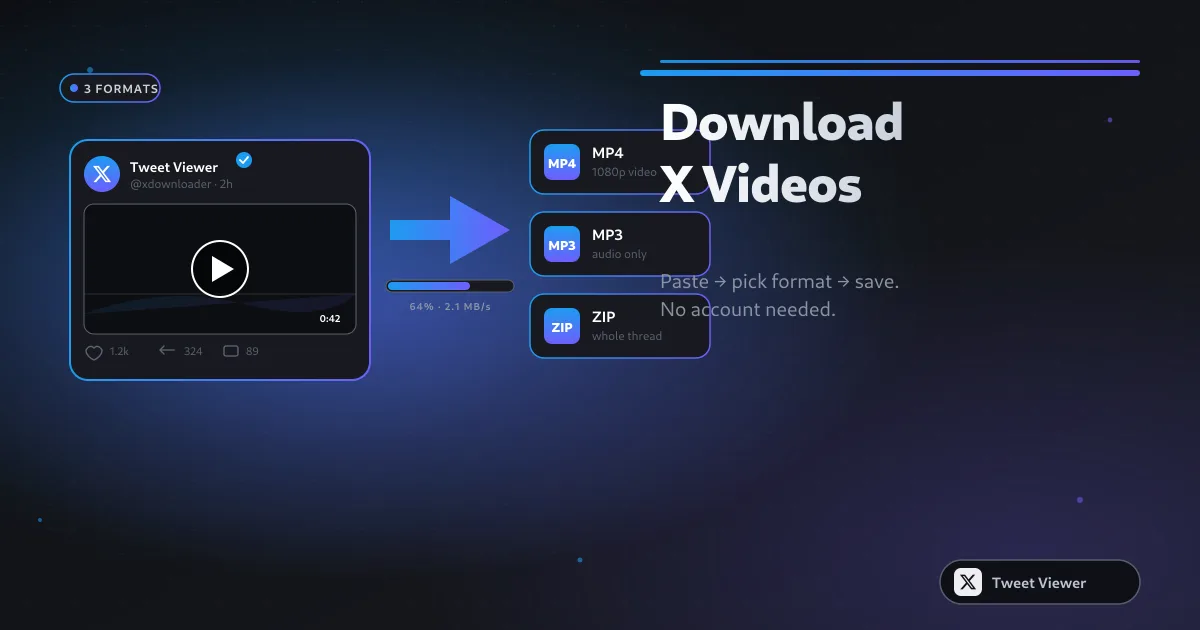
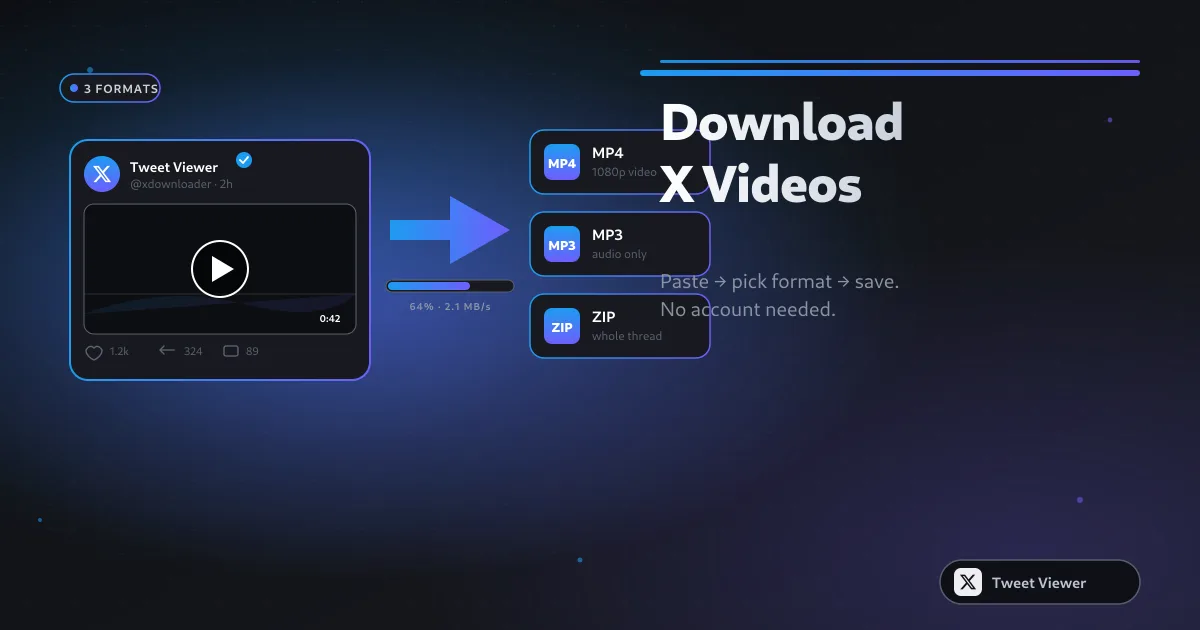
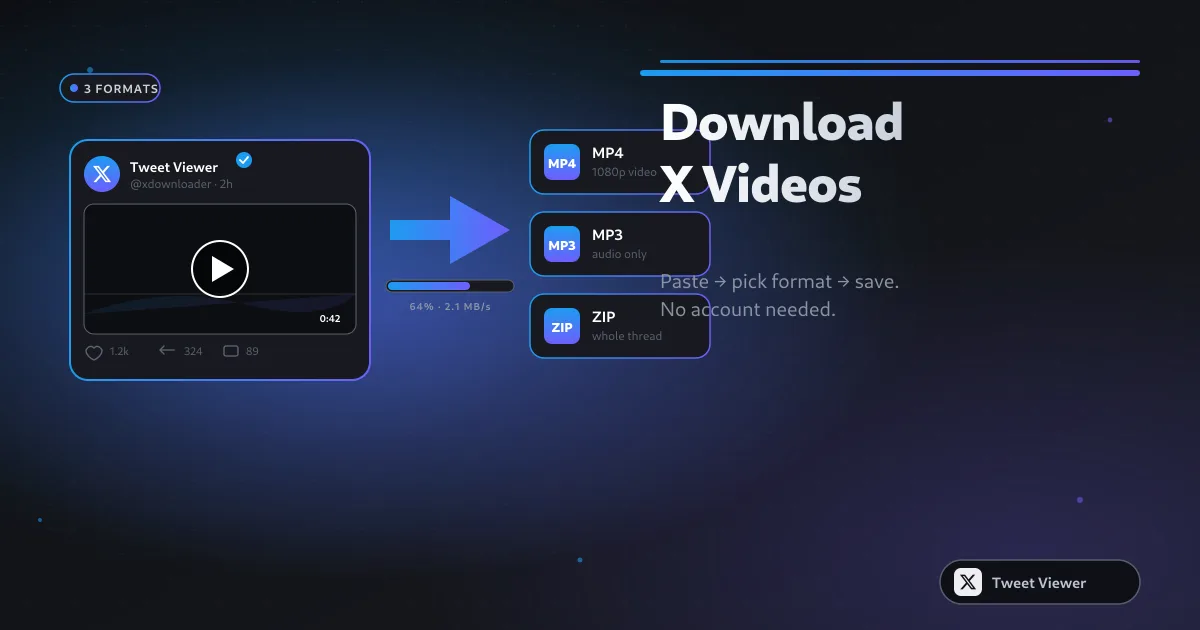
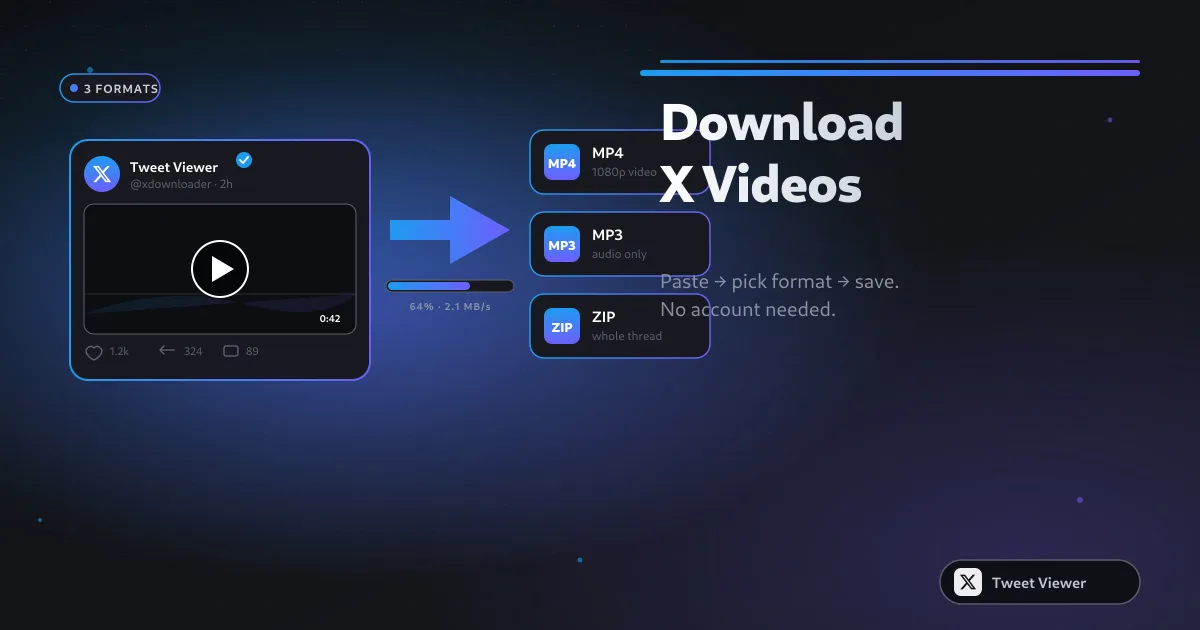
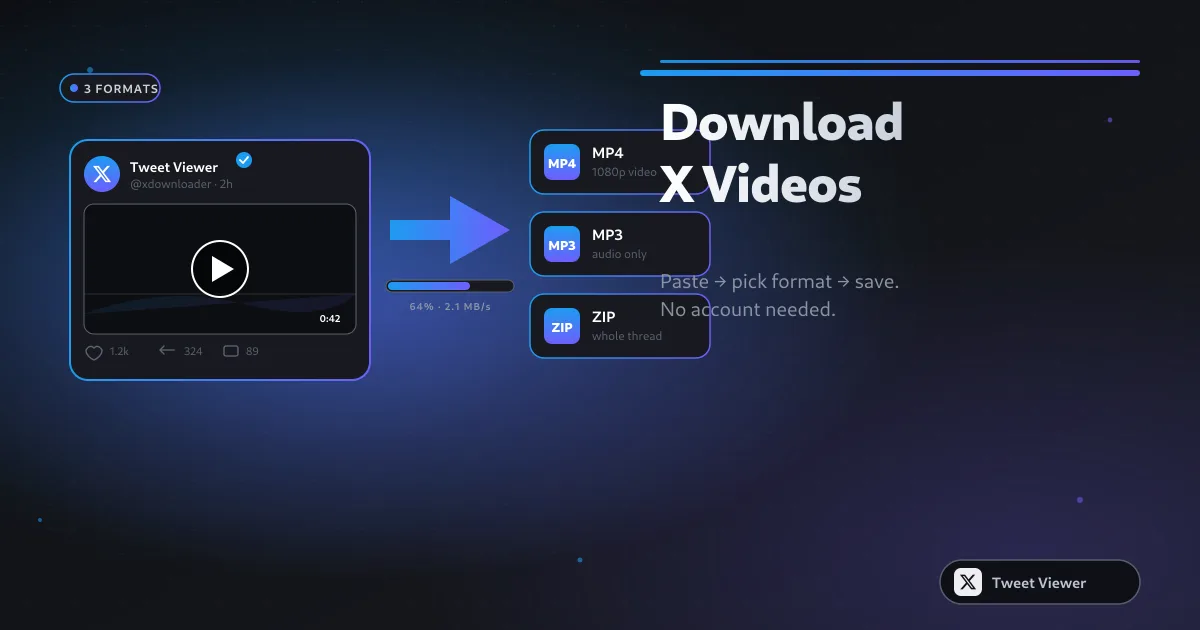
لا تُعد Tweet Viewer أداة واحدة، بل مجموعة من الوظائف المتمايزة. تحفظ أداة تنزيل MP4 عالية الدقة فيديو أي منشور بدقة تصل إلى 1080p Full HD. تقبل أداة التنزيل المجمّع قائمة من روابط X وتُعيدها كأرشيف .zip واحد. تستخرج أداة تحويل MP3 المسار الصوتي من منشور فيديو مباشرةً على جهازك باستخدام ffmpeg.wasm. تُخرج أداة لقطة الشاشة أي منشور كصورة PNG عالية الدقة. تحفظ أداة تنزيل GIF صور GIF المنشورة على X أو تحوّل فيديو إلى GIF متحرك قابل للمشاركة. أما عارض تويتر فيتيح لك تصفح أي ملف شخصي عام أو منشور أو وسائط بشكل مجهول — بدون حساب أو تسجيل دخول.
تشكّل أربع فئات معظم الزوار هنا. المستخدمون العاديون الذين شاهدوا فيديو على X ويريدون الاحتفاظ به، وصنّاع المحتوى الذين يؤرشفون منشوراتهم ولقطاتهم المرجعية الخاصة، والصحفيون الذين يحفظون التغريدات ذات القيمة الإخبارية قبل حذفها، والمسوّقون الذين يجمعون محتوى العلامة التجارية والمنافسين للتحليل. لا أحد منهم يريد حسابًا أو اشتراكًا أو علامة مائية — ولا أحد منهم يحصل على ذلك.
السبب الأكثر شيوعًا لوصول الناس إلى Tweet Viewer هو حاجة واحدة: حفظ فيديو منشور معيّن دون تسجيل الدخول إلى X. الصق رابط المنشور في المربع أعلاه، اضغط تنزيل، اختر 1080p / 720p / SD، ويصل ملف MP4 إلى مجلد التنزيلات لديك في ثوانٍ. لا يُستخدم أي حساب X، ولا تظهر أي رسالة لتسجيل الدخول، والملف هو نفس ملف MP4 تمامًا الذي يقدّمه X في المتصفح.
تحفظ أدوات Tweet Viewer محتوى تويتر بنفس الجودة التي يقدّمها X — دون إعادة ترميز، ودون علامة مائية، ودون سقف إجباري عند 720p. تصلك الفيديوهات كملف MP4 نظيف، والصوت كملف MP3 بمعدل 128 kbps، ولقطات الشاشة كصورة PNG بجودة retina، والدفعات كأرشيف .zip واحد. ما تنزّله هو بالضبط ما تم نشره.
يصل كثير من المستخدمين بعد البحث عن بدائل لـ SSSTwitter وSSSX وTwitterVideoDownloader وSnapX وSaveTwt وXSaver وSaveTweetVid وTWDown وTwDownloader وTwdownload وSnaptwitter وأدوات متنوعة لتحويل "تويتر إلى MP3". تعمل Tweet Viewer كبديل موحّد لكل هذه الأدوات — خمس أدوات في نافذة متصفح واحدة، دون صفحة إعادة توجيه محمّلة بالإعلانات بين اللصق والتنزيل، ودون مستوى مدفوع يخفي جودة إخراج أعلى.
لا تطلب Tweet Viewer أي أذونات. لا تطلب اسم مستخدم X أو كلمة المرور أو الوصول إلى الحساب. يستعلم متصفحك عن المنشور الذي تلصقه مباشرة عبر واجهة FxTwitter API العامة، ويبث الوسائط من شبكة CDN العامة لدى X مباشرة إلى جهازك — لا يرى خادمنا الرابط أبدًا، ولا يُخزَّن عنه أي شيء.
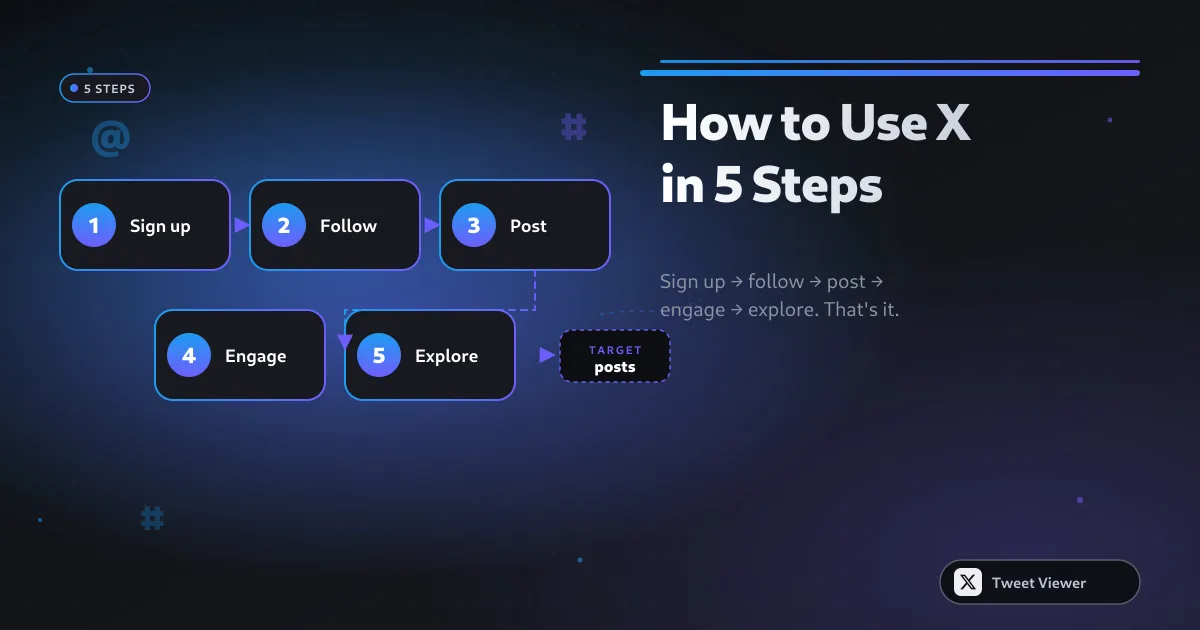
انسخ رابط أي منشور عام على X (تويتر). الصقه في المربع أعلاه. اضغط تنزيل. اختر التبويب المطابق لما تريده — فيديو MP4، أو صوت MP3، أو لقطة شاشة PNG، أو تنزيل مجمّع .zip إذا كان لديك عدة روابط — وينزل الملف مباشرةً إلى مجلد التنزيلات لديك على iPhone أو Android أو Windows أو Mac. ما زلت عالقًا؟ تغطي صفحة الأسئلة الشائعة لدينا أكثر المشكلات شيوعًا.